industry news
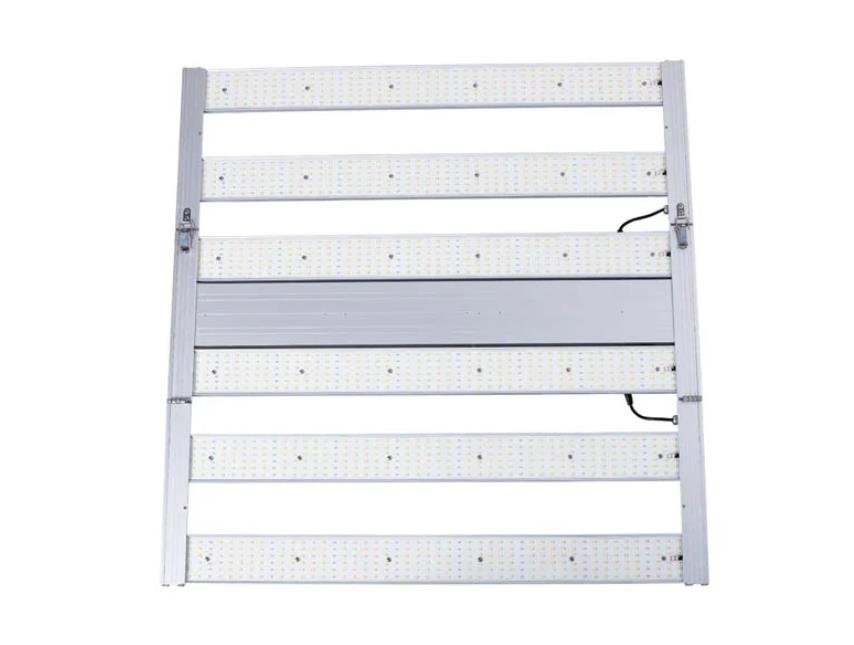
LED grow light replacement signs for aging diodes
industry news, news 29/10/2026 6
Many indoor cultivation operators continue running LED grow lights long after their internal diodes have begun to degrade, assuming the system is still fully functional as long as it illuminates the canopy. Slow, gradual diode aging rarely causes an immediate total failure, so performance loss often goes unnoticed for weeks or months before it shows up as stunted growth, uneven canopy development, or lower final yield. Learning to recognize the subtle, early signs of aging……
LED grow light humidity matching tips for indoor gardens
industry news, news 29/10/2026 6
Even the most carefully calibrated LED grow light spectrum will fail to deliver expected plant performance if surrounding humidity levels are not properly matched to the light’s operating schedule and the plant’s active growth stage. LED grow lights produce a distinct thermal profile that shifts local air temperature around the canopy, directly altering how much moisture the growing air can hold at different points in the daily light cycle. When humidity levels are not ali……
LED grow light mounting ideas for vertical growing systems
industry news, news 28/10/2026 6
Vertical growing systems stack multiple plant layers to maximize space, but this dense arrangement creates unique challenges for light distribution, heat management, and long-term structural stability. Unlike single-level grow spaces where fixtures hang from a single overhead plane, vertical setups require mounting approaches that account for variable distances between stacked shelves, different plant height requirements across layers, and the need to access each tier for ……
LED grow light spectrum benefits for fruiting plants
industry news, news 28/10/2026 9
Fruiting plants go through distinct physiological stages that demand carefully calibrated light conditions to support flowering, pollination, and the final development of dense, flavorful fruits. Unlike general-purpose lighting setups that deliver a broad, unchanging mix of wavelengths, targeted spectrum tuning aligns light output with the exact biological needs of fruiting crops at each critical growth phase. This approach draws on decades of controlled-environment agricu……
LED grow light troubleshooting for flickering issues
industry news, news 27/10/2026 10
Flickering in LED grow lights is one of the most disruptive hidden issues in indoor cultivation, and it often goes unnoticed for long stretches before it creates visible problems with plant growth. Rapid, repeated pulsing of light output can disrupt plant photosynthesis cycles, create uneven growth patterns across the canopy, and even cause unnecessary stress that slows down overall development. Many growers first notice the problem when their crop starts showing unexpecte……
LED grow light for hydroponic leafy vegetable cultivation
industry news, news 27/10/2026 7
Hydroponic leafy vegetable cultivation creates a uniquely controlled growing environment where every variable, from nutrient solution balance to air circulation, can be tuned to maximize plant health and yield, and lighting is one of the most impactful of all these adjustable factors. Unlike field farming that relies entirely on inconsistent natural sunlight, indoor hydroponic systems depend on their artificial lighting to deliver a stable, carefully calibrated light outpu……
LED grow light power consumption monitoring tips
industry news, news 26/10/2026 13
Tracking LED grow light power consumption is not just about keeping a general eye on energy use, it is a practical way to spot unexpected performance drops, catch small issues before they turn into costly failures, and make sure your entire grow setup runs as efficiently as you planned. Many growers overlook consistent monitoring, and only realize something is wrong when their monthly utility bill jumps far higher than expected, or their lights start underperforming in the……
LED grow light placement strategies for uniform coverage
industry news, news 26/10/2026 11
Even the most well-designed spectrum will fail to support consistent, healthy plant growth if your LED grow light placement creates uneven light distribution across your growing space. Many growers run into the same common issues: a small patch of plants directly under the light grows dense and vigorous, while plants near the edges stretch toward the source, develop weak stems, and produce far lower yield than expected. A thoughtful placement strategy does not chase artifi……
LED grow light lifespan extension best practices
industry news, news 23/10/2026 11
LED grow lights are a core investment for long-term cultivation operations, and their consistent performance directly influences crop health, uniformity, and growing cycle stability. While many growers focus on spectrum tuning and light placement to boost yields, far fewer implement structured practices that preserve the fixture’s functional integrity over thousands of operating hours. Small, consistent adjustments to daily operation and regular care can prevent premature ……
LED grow light cleaning guide to remove dust buildup
industry news, news 23/10/2026 8
Dust buildup on LED grow lights is one of the most overlooked factors that quietly reduce growing efficiency over time. Even a thin, nearly invisible layer of fine particles can block a significant portion of the photosynthetic photon flux that plants depend on, leading to slower growth, uneven canopy development, and wasted operational energy. For long-term cultivation spaces, regular and targeted dust removal does not just preserve light output, it also supports consiste……